
Surprising fact: privacy protections that look impressive on a spec sheet — Tor, coin control, shielded addresses — can still leak identifying signals because of simple operational mistakes, not software flaws. The difference between plausible privacy and practical anonymity often comes down to how a user interacts with the wallet: which node they use, how they mix on-chain behaviors across coins, and whether they combine private and transparent flows in the same session. This article compares the primary mechanisms for anonymous transactions and in-wallet exchange, explains where each wins and where each breaks, and offers a reusable framework to choose practices and software for privacy-conscious users in the US.
We’ll focus on two practical bundles you’ll encounter in a modern privacy wallet: (A) built-in coin-level privacy on Bitcoin and Litecoin plus network-layer protections, and (B) native privacy currencies like Monero and shielded Zcash integrated with swaps. Both approaches are supported in different ways by Cake Wallet’s multi-currency, open-source design, but they carry different security implications and operational limits that matter for custody, legal context, and threat models.
How the mechanisms work: inside the two approaches
Approach A — Bitcoin/Litecoin privacy tools: This is a layered approach built on UTXO-level controls. Features such as PayJoin v2, Silent Payments, explicit UTXO coin control, transaction batching, and optional MWEB for Litecoin all reduce linkability by altering how inputs and outputs appear on the public ledger. PayJoin (P2EP) changes the common-input heuristic by having the receiver contribute inputs; batching reduces the number of on-chain events; explicit coin control makes it possible to avoid combining clean and tainted UTXOs. These features are most effective when combined with network privacy (Tor/I2P or custom nodes) so the blockchain observer cannot easily link your IP to transactions.
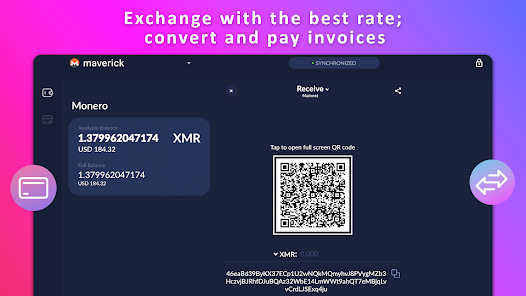
Approach B — Native private ledgers: Monero’s ring signatures, stealth addresses, and confidential amounts obfuscate senders, recipients, and amounts by default; Cake Wallet’s Monero implementation emphasizes that the private view key never leaves the device and supports subaddresses for unique routing. Zcash’s shielded pool accomplishes similar goals for users who send and receive from shielded (z-) addresses; Cake Wallet enforces mandatory shielding to avoid transparent leaks. These native privacy currencies reduce reliance on complex on-chain tactics but have different trade-offs, like smaller liquidity, slower exchanges, or regulatory scrutiny.
Trade-offs and attack surfaces: custody, network identity, and exchange routing
Custody: The single most important security decision is custody. A non-custodial wallet that keeps keys on-device and uses device-level hardware encryption (Secure Enclave / TPM) plus a short PIN and optional biometrics reduces remote compromise risk. Cake Wallet is open-source and non-custodial, integrates with hardware wallets (Ledger, Cupcake air-gapped), and uses device-level encryption — all positive design choices for a US user worried about theft and subpoenas. But remember: non-custodial does not mean invulnerable. Local device compromise, poor seed management, or social-engineering remain dominant risks.
Network-layer deanonymization: Even the strongest cryptographic privacy fails if adversaries can connect transactions to IP addresses. Tor-only mode, I2P proxy support, and custom node connections materially reduce this vector. The wallet’s zero-telemetry policy helps, but users must still ensure they don’t leak metadata elsewhere (emailing screenshots, reusing addresses publicly, or connecting the wallet through a corporate VPN that logs traffic). In short: network protection is necessary but not sufficient.
Exchange-in-wallet routing: Built-in swaps and the NEAR Intents routing that finds liquidity across market makers are powerful conveniences that keep coins on-device and avoid centralized custodial exchanges. However, cross-chain swaps create new linkages: a single in-wallet swap that takes BTC to XMR via market makers may leave residue on order books or counterparties’ records. Decentralized routing reduces reliance on a single counterparty, but it does not erase the fact that swap counterparties learn trade details. If your threat model is a well-resourced observer subpoenaing market makers, assume some metadata might be revealed — choose routing and counterparties accordingly and prefer native-privacy on the destination whenever possible.
Where each approach breaks — and a practical decision framework
Bitcoin privacy tools break when users accidentally merge UTXOs of different provenance, reuse addresses, or rely solely on on-chain techniques without network obfuscation. PayJoin and batching only help if both counterparties and the network layer cooperate. Conversely, Monero and shielded Zcash weaken if users reveal view keys, use transparent ZEC addresses, or route transactions through exchanges that require identity verification.
A simple decision heuristic: pick your dominant risk and let it guide the stack. If your primary worry is ledger linkability from passive chain analysis, prioritize Monero or mandatory shielding and use in-wallet swaps into those assets before spending. If your threat is device compromise or theft, prioritize hardware signing and secure enclaves; use Cupcake or Ledger integration and keep large balances offline. If regulatory exposure via counterparties is the main concern, avoid custodial exchanges and prefer decentralized NEAR Intents routing, but recognize counterparties in routes still see trade details.
Operational rules that increase practical anonymity
1) Separate identities: maintain distinct wallets for private savings (Monero, shielded ZEC, MWEB-enabled LTC) and public spending (transparent BTC/ETH). Mixing these across the same node or device invites cross-linking. 2) Never export private view keys or recovery seeds to third-party services. Cake Wallet ensures Monero view keys never leave the device, which helps, but this is a user discipline as much as a feature. 3) Use Tor-only mode or a hardened privacy network whenever broadcasting transactions; avoid default ISP routing when possible. 4) When swapping, prefer chains with native privacy on the destination; the fewer off-chain settlement counterparts that can observe both sides of the swap, the better. 5) Apply strict coin control: do not combine privacy UTXOs with clearly tainted inputs.
Limitations, unresolved issues, and what to watch next
There are unresolved tensions in the privacy space. Liquidity for native-private assets remains a constraint: Monero and shielded ZEC markets are smaller and may attract greater regulatory attention in some US jurisdictions. Wallet-level mandatory shielding (ZEC) avoids accidental leaks but can complicate migrations from incompatible wallet seeds — the Zashi migration limitation is an example of practical friction that matters when moving funds. Decentralized swap routing is an improvement over single counterparty models, but it’s not a panacea against legal process that targets market makers.
Signals worth watching: improvements in PayJoin adoption among merchants would reduce linkability for BTC payments; broader MWEB activation for Litecoin could create an additional pseudo-private rail; regulatory actions that pressure market makers handling swaps could change how NEAR Intents routes operate. For users, the single most useful short-term indicator is adoption: as more counterparties adopt privacy-preserving protocols, the practical anonymity of UTXO techniques improves.
Where to start if you care about practical privacy (a short checklist)
Secure your seed and use hardware signing. Prefer device-level encryption and a simple PIN plus biometrics to protect local access. Run the wallet in Tor-only mode for network-layer privacy. Use Monero or shielded ZEC for holdings you want to keep unlinkable by default; use Bitcoin privacy tools (PayJoin, coin control, batching) for interoperable payments while avoiding address reuse. When swapping inside the wallet, remember that counterparties in routes may hold metadata — prefer decentralized routing and native-private destinations. If you want to evaluate a multi-currency wallet that implements these components, consider reviewing the project directly at https://cake-wallet-web.at/ to match features and platform support to your operational needs.
FAQ
Q: Are in-wallet swaps always private?
A: No. In-wallet swaps reduce custody risks because your keys never leave the device, but swaps route through market makers and relayers who may see trade details. Decentralized routing reduces reliance on a single counterparty but cannot eliminate the fact that counterparties learn parts of the trade. For the highest privacy, swap into a native-private coin (Monero/shielded ZEC) and avoid revealing trade confirmations or screenshots.
Q: Does using Tor make on-chain privacy unnecessary?
A: No. Tor protects network-level identity (IP addresses) but not ledger linkability. On-chain heuristics, address reuse, and UTXO merges still reveal relationships on the blockchain. Effective privacy requires aligning network and ledger protections: Tor + PayJoin/coin control or Tor + Monero/shielded transactions, depending on the asset.
Q: If a wallet is open-source, am I safe from backdoors?
A: Open-source code increases transparency but does not guarantee safety. Build reproducibility, independent audits, and trustworthy distribution channels matter. Also, local device compromises, phishing, and social engineering can undermine software integrity even if the code is clean.
Q: What if I need to migrate Zcash from a different wallet?
A: There’s a known limitation when migrating Zcash from some wallets like Zashi: seed phrases may be incompatible due to change address handling. The practical fix is to create a new ZEC wallet and transfer funds manually, which is safe but inconvenient. Always test small transfers first when migrating across implementations.